

The year 2024 will be remembered as one of economic transition — a bridge between post-pandemic recovery and a new global cycle defined by inflation control, interest rate shifts, and geopolitical realignment.
From monetary policy pivots to trade tensions and technological investment booms, the past year reshaped the landscape for traders, investors, and policymakers alike.
Here’s a recap of the most important economic events of 2024 and how they shaped today’s markets.
1. Inflation Finally Eased, but Not Everywhere
After two years of persistent price pressure, global inflation slowed in 2024 — though unevenly across regions.
The U.S. managed to bring inflation below 3% by late summer, allowing the Federal Reserve to shift from aggressive hikes to cautious rate cuts.
The Eurozone followed a similar path, with the European Central Bank signaling the end of its tightening cycle.
Emerging markets, however, continued to face volatility due to energy costs and currency depreciation.
This shift marked the end of the “inflation shock” era, but not yet a return to pre-pandemic stability.
2. Central Banks Began the Pivot
2024 was the year of monetary policy transitions.
After a historic tightening phase, major central banks finally began cutting interest rates — slowly and strategically.
The Fed implemented its first rate cut in September.
The ECB and Bank of England followed in Q4.
The Bank of Japan, however, remained cautious, holding rates near zero but reducing bond purchases.
These actions set the tone for 2025, as markets priced in a new era of moderate growth and stable yields.
3. Geopolitical Tensions Redefined Trade
From the U.S.–China trade rivalry to new European supply chain policies, 2024 was shaped by growing geopolitical fragmentation.
The U.S. introduced new tariffs on certain Asian goods, reigniting trade disputes.
The EU accelerated energy independence, investing heavily in renewables and green manufacturing.
The Middle East saw renewed volatility in oil markets, pushing Brent prices above $90 in Q3.
Globalization didn’t die — it evolved. Supply chains became more regional, and economic alliances more strategic.
4. The Crypto Market Matured
After turbulent years, cryptocurrencies entered a new phase of credibility.
Regulatory frameworks such as MiCA in Europe and new U.S. legislation around stablecoins gave institutional investors more confidence.
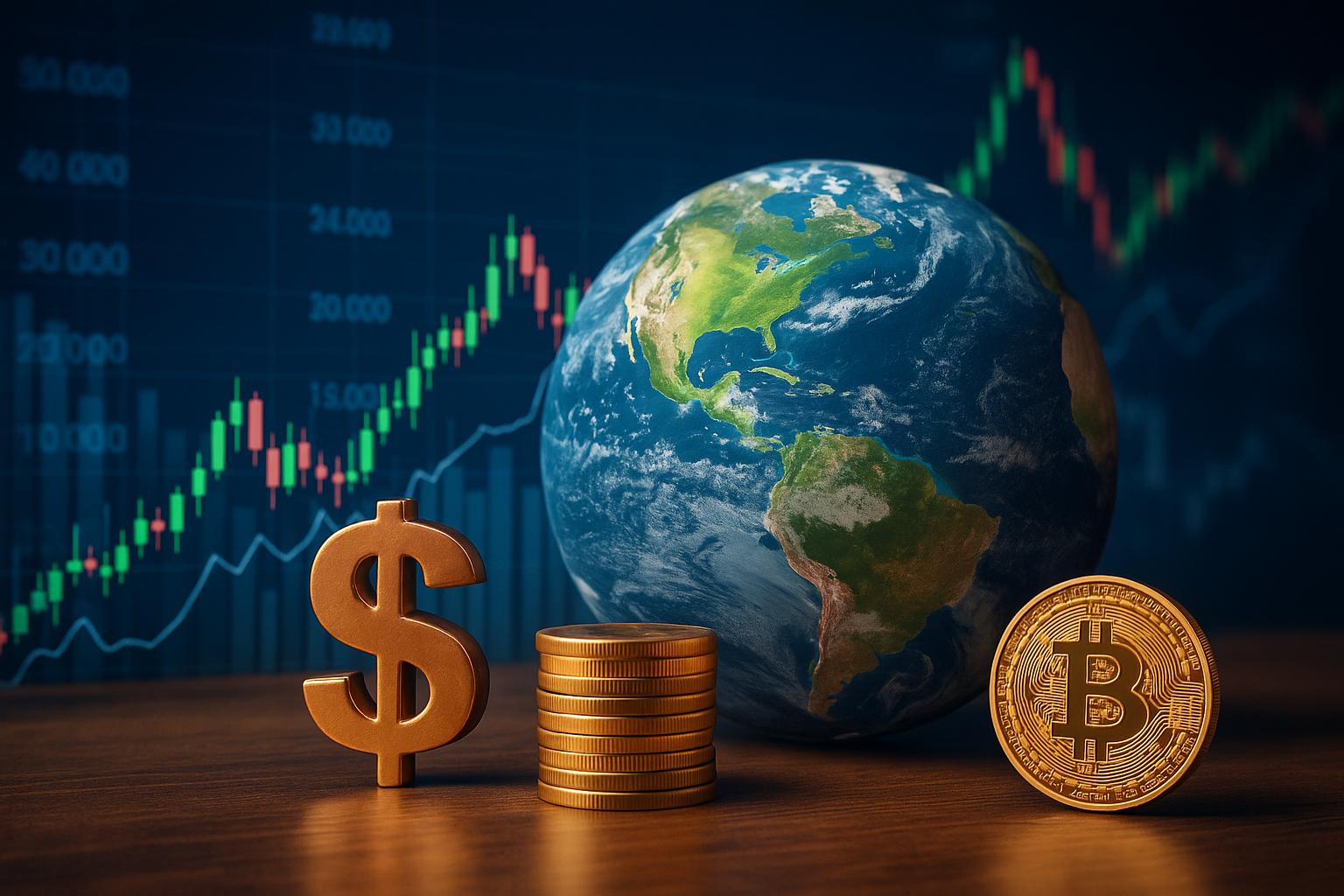
Bitcoin reached a new all-time high near $124,000 in August.
Ethereum gained traction in institutional DeFi applications.
Tokenization of real-world assets became one of the year’s fastest-growing trends.
Crypto finally began to integrate with the traditional financial system, not compete against it.
5. The Global AI Investment Boom
2024 also saw an explosive rise in artificial intelligence investment.
Corporations and governments poured billions into AI infrastructure, semiconductors, and data centers.
Companies like NVIDIA, Microsoft, and Google led market gains.
AI-driven productivity tools reshaped industries from finance to manufacturing.
Stock indices like the NASDAQ surged on tech optimism.
The “AI gold rush” became one of the defining themes of 2024 — a structural shift that could shape the global economy for years to come.
6. Commodities and Energy Volatility
Energy markets remained a key source of volatility.
Oil prices fluctuated between $75–$95 per barrel, while natural gas saw price spikes in Europe due to weather-related shortages.
At the same time, gold hit new record highs above $2,300/oz, reflecting investor demand for safety amid uncertainty.
The world’s energy transition accelerated, but fossil fuels still dominated short-term supply and price stability.
Conclusion: A Transitional Year with Lasting Effects
2024 was a year of balance and recalibration. Inflation came under control, monetary policy softened, and technology took center stage.
Yet, the lessons were clear: economic resilience requires adaptability — and investors who stayed informed and diversified benefited most.
As 2025 begins, markets face new opportunities built on the foundation laid last year. The global economy isn’t just recovering — it’s transforming.
👉 At Inversión Sin Trampa, we help you understand what’s behind every market move — beyond the headlines.